8 things we learned at The Regional Sessions NSW
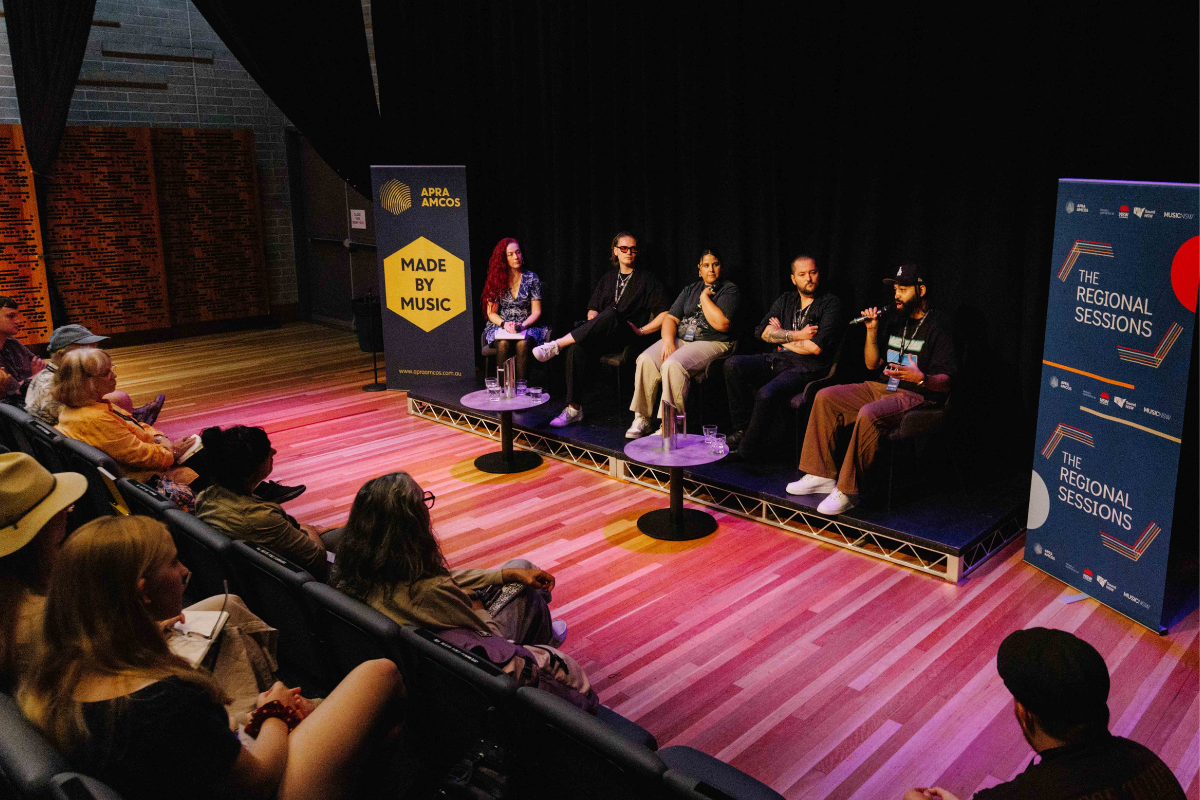
The Regional Sessions New South Wales headed to Bega, Broken Hill, Kiama, Port Macquarie and Lennox Head last month
Songwriters and musos of all levels came along to learn from top Australian talent including Kevin Mitchell, Anna Laverty, Heide Peverelle and more
What a great time we had presenting The Regional Sessions across NSW: Bega, Broken Hill, Kiama, Port Macquarie and Lennox Head.
The 'In Conversation' talks covered a range of topics: performing live, understanding the music business, getting comfortable in the recording studio and more.
Here are our top 8 takeaways!
1. Play live, create a scene
First thing’s first: How to grow your music project?
From Kevin Mitchell (Jebediah/Bob Evans): “Put yourself into situations where you’re going to meet [the right] people. Events like this! A question I get asked a lot is ‘how do I get a gig?’
“If you can’t get a gig in a pub, hire a hall, a community centre. Create a scene that people want to be a part of. Build it yourself. I really think that is the most practical way of getting anywhere, from a live point of view.”
“Play gigs as often as you can”, said Lindsay McDougall in Bega. “There’s a big difference between playing guitar at home, playing guitar in your bedroom or school and playing guitar at gigs. You learn what people like, you learn how to do things on stage that crowds like, and you find out what you like to do on stage.”
2. Preparation is key for studio recording
Those skills flow into the recording studio too, says Anna Laverty. As a band producer, her job is made easier when bands are prepared and well-rehearsed, before they hit the recording studio. The more prepared a band is, the quicker they’ll be able to record the ‘magic take’ – the take that makes it onto the finished record. Make sure arrangements, tempos and transitions are figured out ahead of time, so in the studio you can focus on refinement, enhancement and getting the best possible recording.
3. Find what feels good
In Kiama, Folk Bitch Trio’s Heide Peverelle told the audience that it took some time to hone the band’s style. The way the band records has grown over time, learning through experience that they prefer to record together, rather than in separate booths.
“Recording is a lot more fun,” she says. “Now we’ve had a bit of practice and it’s easier for us to say what we want. To ask for more of our vocals in our headphones. Even little things like that in the beginning were hard. Because [at the start], we didn’t know what we wanted, we didn’t have the language.”

Alice Matthews and Lindsay McDougall in conversation in Bega. Photo: David Rogers

Heide Peverelle in conversation with Ash McGregor in Kiama. Photo: Samantha Quintalow
4. Set the vibes: the story of Florence + The Whale
Anna Laverty recalls working with Paul Epworth in London, where a young Florence + The Machine came in to record. “Florence came in and she was quite nervous”, recounts Laverty. “I remember coming in one morning and Paul was like, ‘alright, I want to offset these nerves. Can you find a projector?’
“We set up the whole room with projectors and we got a video with whales swimming in the ocean, and it was projected everywhere and all the lights were out. The whole studio was like being underwater and it really set the scene! If you set up the room to be really vibey they’ll get to the ‘magic take’ quicker. On time, in budget!”
5. Imposter syndrome strikes us all
“The bigger artists we look up to are just like us,” says Kevin Mitchell.
“They’re just a bunch of people, like everyone else. They’re just a band…often those people are just working really f*ing hard. They’ve spent a really long time playing their instrument and getting good at it. Anybody can access that.
“I think imposter syndrome is really common. It doesn’t matter how successful you are or how long you’ve been doing it. Everybody experiences it.
“Talking to Paul Kelly, when I was touring with him a few years ago. Paul Kelly is 70 years old, as successful a musical artist in Australia as you can get. He’s had such a long career, he’s so well respected, and he still has those moments.”

MusicNSW's Caitlin McGregor and Anna Laverty in conversation in Port Macquarie. Photo: Jake Davey

Kevin Mitchell and Bridie Tanner at Lennox Heads. Photo: Elise Derwin
6. "Knowledge is power" - understand the music business
In retrospect, Kevin Mitchell wishes he understood more about the business side of music earlier on. “Being driven by enthusiasm as a teenager, you’re not always thinking about the business side of stuff,” he says. We didn’t expect to have the success that came our way. If I could go back, I would pay more attention to how things worked. What’ s the profit split? How do record company advances work? Understand the mechanisms of the business.”
(Hey APRA AMCOS members, you can head to the RESOURCES section of the website to explain royalties, songwriting splits and more.)
7. "Be a freak!" - Henry Wagons
“I think whenever a band is starting, the importance of agitation and cut is really important,” says Henry Wagons. “A bit of punk, a bit of shock is really important. And then when you develop that career and get attention, it helps. You need to be a freak. Gain a platform, gain currency, and then you can work your magic.”
8. Have fun!
Ultimately, always remember to have fun.
From Kevin Mitchell: “Jebediah was just a vehicle for us to hang out and have fun together. The glue that has kept it together is still the same four people after 30 years, has been that friendship. Making music is supposed to be enjoyable. Doesn’t mean that you don’t have to work hard… but creating and making music is supposed to be fun.”
“Songwriting should always have a sense of play,” says Henry Wagons. “Don’t be burdened by the weight of expectations or the expectations of fame & fortune, or driven by bitterness or frustration. Maintain a sense of play!”

Henry Wagons & Queenie in conversation at Broken Hill

Port Macquarie networking & performances. Photo: Jake Davey