PROOF OF THEFT: Investigation uncovers songs stolen for AI

Songs from Midnight Oil, Cold Chisel, Sia & more stolen to train AI datasets
New investigation by The Atlantic allows users to search its AI Watchdog database
Comes amidst escalating AI company lobbying of Australian and New Zealand Governments
Midnight Oil. Cold Chisel. Sia. INXS. Tina Arena. Kylie Minogue. Split Enz. Stan Walker. Crowded House. Nick Cave. Tame Impala. Lorde. Flume. Marlon Williams. Yothu Yindi. Bic Runga. Fat Freddy’s Drop. Dave Dobbyn. Gurrumul. The Beths. Slim Dusty. Warumpi Band. Cat Empire. Hilltop Hoods. Troy Casser-Daley. Katchafire. The songs that built Australian and New Zealand culture now confirmed in leaked AI training datasets, as tech companies lobby to trade investment for immunity.
A new investigation by The Atlantic has uncovered millions of songs including Australian and New Zealand musical works that have been taken as part of four ‘giant datasets of songs that are being shared within the AI-development community’. The Atlantic’s AI Watchdog tool allows anyone to look up an artist and see exactly which of their tracks have been fed into AI training systems without consent, without a licence, and without payment.
AI companies have escalated lobbying of the Australian and New Zealand Governments to reopen copyright law as part of negotiations over major data centre investment commitments and unverified ‘productivity gains’.
Even a superficial search quickly reveals some of the biggest music names in Australian and New Zealand music. The implications of what the database holds of APRA AMCOS’s 128,000 songwriter, composer and publisher members is deeply concerning.
The names of songwriters, composers and artists is indiscriminate and includes everything from contemporary, popular, classical, screen composition and traditional cultural works, and includes:
Kylie Minogue, Midnight Oil, Cold Chisel, INXS, AC/DC, Sia, Crowded House, Flume, Bic Runga, Slim Dusty, Troy Casser-Daley, Tina Arena, Marlon Williams, Nigel Westlake, Peter Sculthorpe, Jenny Morris, Tim Minchin, Six60, Hilltop Hoods, Dave Dobbyn, Stan Walker, Split Enz, Lorde, Gotye, Men at Work, Aldous Harding, Australian Chamber Orchestra, New Zealand Symphony Orchestra, Tkay Maidza, Kaylee Bell, Benee, Che Fu, King Stingray, Horomona Horo, Mike Nock, Jed Kurzel, Burkhard Dallwitz, Joseph Tawadros.
Dean Ormston, Chief Executive APRA AMCOS said: "Midnight Oil. Sia. Crowded House. Lorde. Yothu Yindi. This week, AI companies are asking the Australian and New Zealand Governments for a copyright carve-out. This week, we can show you exactly what they have already taken. No permission. No licence. No payment. These are not bargaining chips, they are the life's work of Australian and New Zealand songwriters.”
Australia rejected a copyright exception for AI platforms last October. It was a decisive decision, and other governments have since followed Australia’s lead.
"Major tech platforms have not come to the table. Not once. Instead they have lobbied governments, circulated policy papers, and proposed solutions designed to extinguish any obligation to pay. The only path forward is a genuine licensing conversation with the people whose work they have been using. We are ready. We have always been ready. The question is whether they are.”
The human cost is documented. APRA AMCOS's landmark AI and Music Report found that without a mandatory licensing framework, Australian and New Zealand songwriters and composers face a 23 per cent hit to their revenues. Across Australia and New Zealand, creators stand to miss out on more than $500 million over just four years.
Among the artists whose work appears in the datasets are Aboriginal and Torres Strait Islander members including Yothu Yindi, Gurrumul, Warumpi Band, William Barton, Christine Anu, Dan Sultan, Emma Donovan, Barkaa, AB Original and David Gulpilil, and Māori artists including Stan Walker, Six60, Maisey Rika, Marlon Williams, and Horomona Horo.
Dame Hinewehi Mohi DNZM, Manukura Puoro Māori/Director of Māori Membership APRA AMCOS, said: “The theft of our music strikes at the very heart of our identity and cultural heritage. Once taken, its integrity cannot truly be restored. Through the indiscriminate scraping of AI systems, our music is stripped of its context, distilled, diluted, and disconnected from its origins. This erasure cuts deeply into the essence of who I am, not only as a creator and advocate for local music, but as an Indigenous person whose culture, stories, and identity are woven into every note.”
Leah Flanagan, APRA AMCOS Director of Aboriginal and Torres Strait Islander Programs and Strategy, said the findings required a specific response. “Aboriginal and Torres Strait Islander artists have not given permission for their work to be used to train these AI datasets. Many of these recordings carry cultural knowledge, language and connection to Country. Their use without consent is not acceptable, these are not just recordings, they are cultural expressions governed by protocols as well as copyright.
In some cases, this is material that has never been available for commercial use by anyone, on any terms. Any response to AI and copyright must address Indigenous Cultural and Intellectual Property specifically and must be developed with First Nations communities at the centre.”
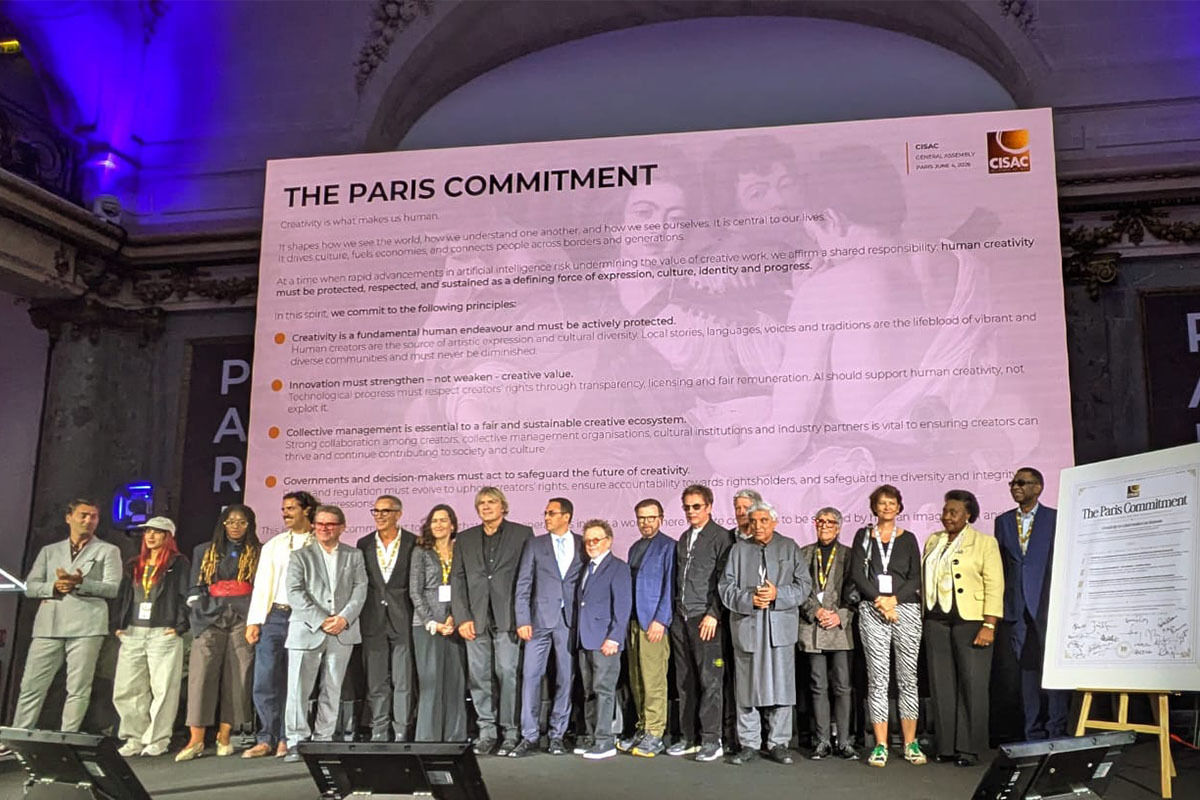
At the CISAC General Assembly in Paris this month, APRA AMCOS joined creator organisations representing more than five million creators worldwide in signing the Paris Commitment: Creation is a human right. We commit to protect it for every generation.
Hundreds of active copyright infringement cases have been filed against AI platforms worldwide, including more than 100 in the US. Licensing frameworks between AI platforms and rights holders are being negotiated across music, news and other creative sectors, including with Australian rights holders. The obligation falls on AI platforms to extend that framework to all rights holders in every market in which they operate.
“The Australian Government made the right call last October. The pressure being applied right now by tech platforms alongside the Tech Council of Australia and Business Council of Australia is designed to reverse it. Our message is the same as it has always been: we are ready to license. We know how to do it. We have been doing it for over 100 years. But it has to be a real licensing framework, not a carve-out dressed up as a compromise,” said Dean Ormston.