Music used in a politically sensitive or contentious context
An info guide on what music creators need to know

While music is often used to drive engagement for political parties, political movements or socially sensitive causes, it is not always the case that the creators want their music to be used in that way or for that purpose.
This guide is designed to help creators and other rightsholders understand how APRA AMCOS and OneMusic manage the licensing of music when used in a politically sensitive or contentious context, and what actions as a rightsholder you can take if faced with the use of your music for a purpose you do not in any way endorse.
There are a number of ways that your music can be used in a politically sensitive or contentious context, and this Information Guide* explains:
- how the public performance of music is generally licensed in Australia and how the use of your music in a politically sensitive or contentious context may not be covered by that licensing;
- how the “synchronisation” of your music in videos is licensed, particularly in social media posts, and how you are able to control that use; and
- what you can do when your music has been used in a politically sensitive or contentious context without a licence or other permission being in place.
The information in this guide may not apply where Commonwealth or State governments use music for the services of the Commonwealth or a State, as special copyright rules apply in those circumstances.
*The information in this guide may not apply where Commonwealth or State governments use music for the services of the Commonwealth or a State, as special copyright rules apply in those circumstances.
1. When your music is being publicly performed in a politically sensitive or contentious context at an event or venue
APRA AMCOS and the Phonographic Performance Company of Australia (PPCA) license the public performance of musical works and the associated music recordings via the OneMusic music licensing initiative.
OneMusic issues public performance music licences to music users that are holding events or operating venues, such as event promoters, live music venues, hotel operators or those putting on outdoor festivals. OneMusic also licenses a large number of councils throughout Australia for the use of music at council events and council-owned venues.
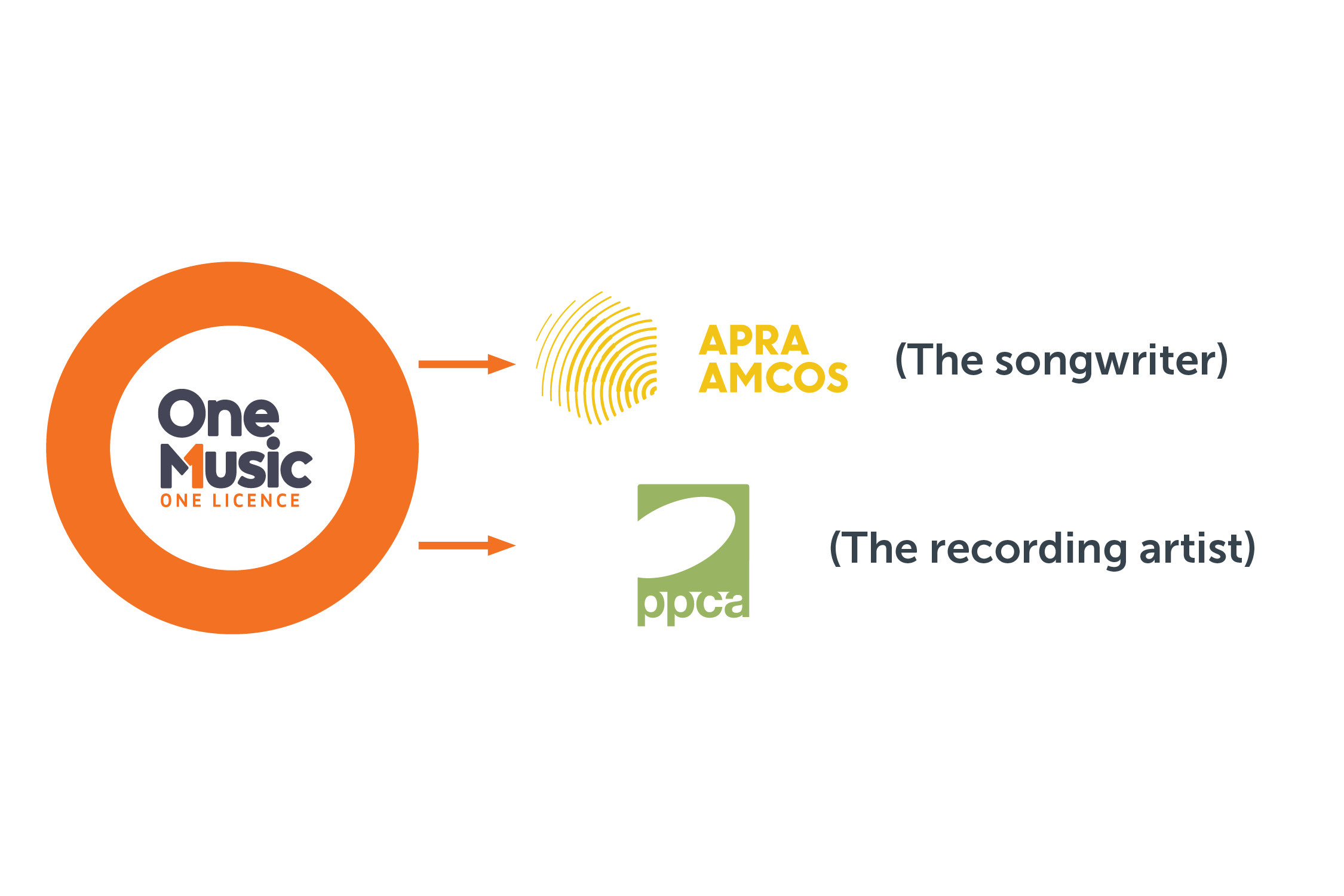
While these OneMusic licences do include rights to publicly perform all musical works belonging to members of APRA and AMCOS, plus all recordings controlled by PPCA, there are a number of controls that mean that if your music is used in a politically sensitive or contentious context it may not be covered for public performance under a OneMusic licence at all.
If an operator of an event obtains a OneMusic event licence, there is a specific limitation in these licences that mean they do not cover the playing of music at events primarily intended to support a political party or political movement.
So, unless you give prior written consent for the operators of the event to use your music, the public performance of music at any event will not be licensed under a OneMusic licence, even if the event operators have a OneMusic licence in place.
What you need to know
- A OneMusic event licence does not cover playing music at events supporting a political party or movement.
- Prior written consent from the rights holders is required and is the responsibility of the licence holder or applicant.
For this reason OneMusic will not issue a public performance licence for an event directly to a political party or political movement without the prior authorisation of the rightsholders whose music will be played.
Also important, is that the music licences that local councils hold with OneMusic do not cover events unless they are council events, which means that political rallies or marches would not be covered under the council’s public performance music licences.
All OneMusic licences also exclude the use of a PPCA Sound Recording when that use may suggest that the artist on that recording has approved, endorsed or is affiliated with any specific goods, services or the licensee’s business. As a result, if the playing of a recording of music at an event is done in a manner that could reasonably create that impression, including in respect of any political party or defined movement, that use is not licensed under a OneMusic licence.
OneMusic has published a guide for political parties and organisers of political events (Political Parties’ Guide to Music Licensing) to inform potential music users of these conditions and direct organisers to seek permission of rightsholders when using music as part of their activities.
What happens if your music is publicly performed at an event that is unlicensed to do so? We explain in section 3.
2. When your music is “synchronised” with visual images in a politically sensitive or contentious context
Incorporating music into any type of visual content is a type of reproduction commonly referred to as “synchronisation” or sync.
APRA AMCOS does not control the right to synchronise* your music for all uses, so permission for that usage must be obtained directly from the rightsholder.
Unauthorised synchronisations of music may appear in video advertisements, promotional materials and on social media.
In practice, the only way that a synchronised video that includes your music may be being used legitimately without your permission is if that is in a private and domestic context, for instance, in someone’s home videos on their personal social media account.
In most cases, the use of your music in a synchronised video in a politically sensitive or contentious context without your consent, whether online or in physical form like a DVD, will be an unauthorised use that may amount to copyright infringement.
*AMCOS does hold members’ synchronisation rights for the purpose of AMCOS’ ‘blanket’ synchronisation licensing under certain limited circumstances, and APRA AMCOS does grant synchronisation rights to Australian commercial and government television stations.
“ Did you know? In 2015, an Australian musician publicly objected to their music being used at political rallies organised by a certain political organisation. The musician denounced the political organisation to their significant social media audience and requested their music not be played at that organisation’s rallies. The organiser agreed to stop using that creator’s music. "
—
3. What to do when your music is used in a politically sensitive or contentious context without your permission
There are a number of options available to protect against the unauthorised use of your music in a politically sensitive or contentious context. Those options do depend on how your music has been used.
-
Public performances
Remember, that often the use of music in a politically sensitive or contentious context is not covered by any ‘blanket’ OneMusic licences. As a result, the public performance of music for that purpose can often amount to copyright infringement under Australian Copyright law.
Copyright infringement is a serious offence that can result in the payment of damages by the infringing party. Courts can also deal with the potential for copyright infringement, by making an order that the person and/or party is prevented from performing that music – what is called an injunction or injunctive relief.
If you believe your music is, or is likely to be, publicly performed without a licence due to a politically sensitive or contentious context, please contact us or you may wish to seek legal advice.
Event organisers, political parties, or other similar organisations should obtain your express permission before performing your music publicly, including providing you with detail as to how the music is planned to be used. You do not need to provide that consent and can instead ask that they avoid the use of your music in that way.
-
Unauthorised synchronisation
If you become aware that your music is being, or is likely to be, used in audio-visual material without your permission, you can take copyright infringement action against the maker of that video, which, if successful may include the payment of damages and a court-ordered injunction to prevent the dissemination or further distribution or sharing of that material.
In many cases, unauthorised synchronisations appear on social media. If you do object to the placement of your music in a video that is on social media, then you are entitled to request that the offending material be taken down from the social media site. You can ask APRA AMCOS to issue a ‘take down’ notice to the social media site on your behalf by contacting Member Services, or you may be able to send a ‘take down’ notice directly.
Arts Law Centre have an information sheet with a suggested procedure for issuing a Takedown Notice if you believe a website has breached your intellectual property rights and you want the infringing material to be taken down.
While ‘take down’ notices are a reasonably useful way to remove unauthorised material from social media sites, it is not always possible to have the offending material removed quickly, and even if it has been, it can sometimes very swiftly appear again in another post.
-
Moral Rights and Passing Off
Creators of musical works have “moral rights” in their works that are separate from copyright protection. These include the right of integrity, which protects creators from having their work subjected to derogatory treatment.
Derogatory treatment includes use of music or lyrics in a way that is prejudicial or damaging to the creator’s honour or reputation.
For example, a songwriter who objects to a political cause may consider it derogatory if their music is used in a way that suggests they support that cause. This can also extend to cases where the lyrics have been substantially changed or altered without permission.
The Arts Law Centre has an information sheet with further information on this process: Moral Rights Letter of Demand Explanation - Arts Law Centre of Australia.
Australian law also prevents a business from falsely “passing off” or misrepresenting the affiliation of one good with another.
In more plain terms, if your work is used without permission in a way that suggests you are associated with a political or social message, this may constitute “passing off”. This can also extend to cases where the lyrics have been substantially changed or altered.
If you become aware of uses of your music in a manner that is either derogatory or you believe is being associated with a cause without your prior consent, it is recommended that you seek legal advice to assist you with the best course of action.
A lawyer may draft a cease-and-desist letter, which will place the user on notice that they are to cease using the music in such a manner in the hope the matter can be resolved without going to court.
If a court does find your moral rights have been infringed or your music has been “passed off” without your consent, the court may grant an injunction against such use, order the user to pay damages and/or require the user to issue a public apology.
“ Did you know? In 2019, the music publisher representing a well-known rock song from the United States sued an Australian political party that used a re-recorded version of that song with the lyrics changed to promote their political message in advertising and on social media. The Court found that that the use infringed copyright and ordered the party leader to pay $1.5 million in damages. "
—
See also



Frequently asked questions
I have a dispute with a co-writer over a work. Can APRA AMCOS help me resolve this?
We have a process for handling disputes between members, for example, if you and another writer disagree on the ownership percentage of a work that has been registered with APRA AMCOS. Please please send a short message via the Contact Us page in the first instance.
Our writer services team will contact the member and see if the dispute can be resolved between the parties. In some instances, we might recommend the dispute be referred to the independent third party alternative dispute resolution facilitator, Resolution Pathways. You can find out more about this process on the Resolution Pathways website.
When working with co-writers, it is best to have a clear written agreement that states the nature of your collaboration.
I'm in a band. How do we split royalties?
Ideally you work it out song by song, as it probably won’t be the same for all songs. You'll need to do this before you register the song with APRA AMCOS.
This is easy, for example, if one person wrote 100% of the lyrics and the other wrote 100% of the music. When you’ve written a song with others, it’s a good idea to have a written agreement that talks about the share of copyright you each take.
How do I update my membership details?
Head to the Writer Portal or access the APRA AMCOS for Music Creators app (download for free from the App Store for Apple devices and on Google Play for Android) to update personal information like bank account, email, or phone number. Need help? Use our handy guide.
Some details, such as a change of legal name, can only be amended via email at [email protected].
How do I log in to the Writer Portal?
In the 'Log in' menu on the website, choose 'Songwriters and composers' and then log in to your account. Enter your email address - the one you use for APRA AMCOS correspondence.
If it's your first time logging in, follow the steps to set up passwordless login.
What is passwordless login?
We use a simple, secure method to log you in – no passwords required. Just enter your account email and we will send you a one-time code. You can also log in with a passkey (Face ID, fingerprint, or your device unlock).